

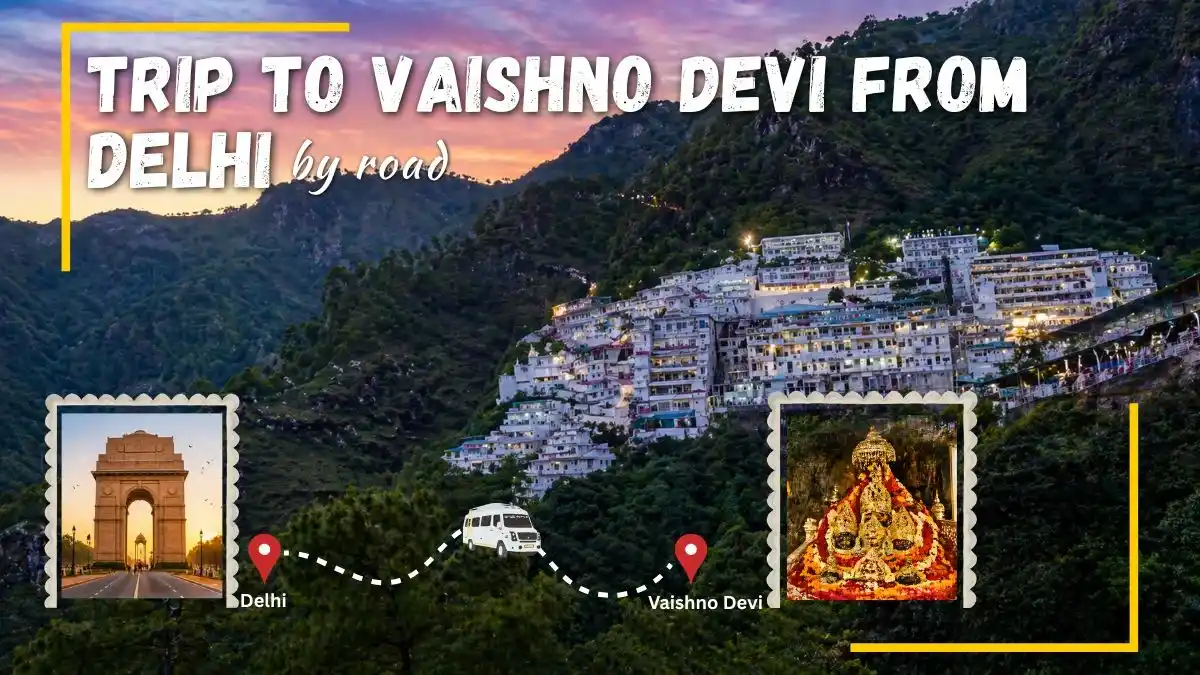
Delhi to Vaishno Devi road trip is more than just a journey- it’s a spiritual experience that begins the moment you leave the city behind. The sacred mountains of Trikuta are calling. Here is everything you need to plan the perfect Delhi–Katra road journey from route maps and budgets to the holy climb itself.
727 Km Delhi to Katra
12h Approx drive time
14 km Trekking distance
5,200 Feet shrine altitude
8M+ Annual pilgrims
Why This Journey Stays with You
There are pilgrimages you complete and then there is Vaishno Devi– a journey that completes you. Nestled at 5,200 feet in the Trikuta Mountains of Jammu and Kashmir, the shrine of Mata Vaishno Devi is one of the most visited pilgrimage sites in the world, drawing over eight million devotees every year. Yet no statistic captures what it actually feels like to arrive at Katra after a night drive from Delhi, watch the mountains dissolve the plains, and begin the 14-kilometre ascent through cool pine-scented air as dawn breaks over the Himalayas.
For Delhiites, Vaishno Devi occupies a uniquely emotional geography. It is far enough to feel like a genuine pilgrimage roughly 727 km from central Delhi to Katra Base Camp – but close enough to be accomplished in a long weekend. The road trip itself, driven overnight or across two relaxed days, is half the experience. This guide covers every kilometre of it.
The Vaishno Devi Shrine Board requires all pilgrims to obtain a Yatra Parchi (trekking permit) before beginning the ascent. Registration is free and available online at maavaishnodevi.org or at counter offices in Katra. Carry a valid government photo ID- it is checked at multiple checkpoints along the route.
The Road: Delhi to Katra Route Breakdown
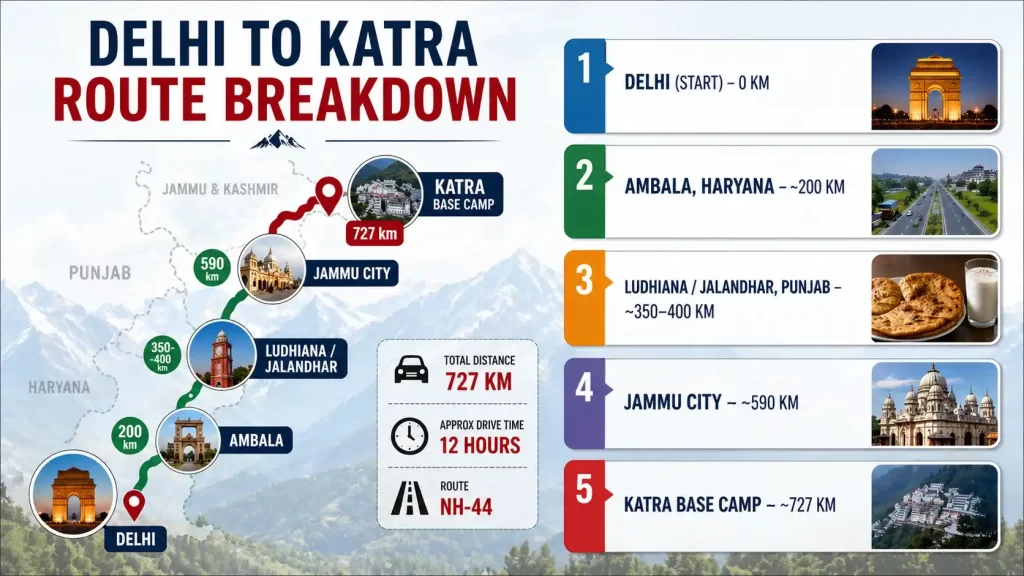
The most popular and well-maintained route follows NH-44 north through Haryana, Punjab, and into Jammu before the final mountain climb to Katra. Road quality is excellent for the first 600 km, with the last 90 km from Jammu to Katra being a winding but scenic mountain highway that unfolds one hairpin bend at a time.
- Delhi (Start)0 km
Depart via NH-44. Best to leave by 9–10 PM for a smooth overnight drive avoiding city traffic. Fill up fuel at your nearest pump.
2. Ambala, Haryana~200 km
First major fuel and rest stop. Excellent 24-hour dhabas. The road widens here – smooth, well-lit, and fast.
3. Ludhiana / Jalandhar, Punjab~350–400 km
Cross the heart of Punjab. Stop at any roadside dhaba for paratha and lassi – this stretch is legendary for food at 3 AM.
4. Jammu City~590 km
Winter capital of J&K. Stop to freshen up, have breakfast, or visit Raghunath Temple. The mountains begin their presence here.
5. Katra Base Camp~727 km
The gateway to Vaishno Devi. Park your vehicle, collect your Yatra Parchi, check in, and prepare for the sacred climb.
Pro tip: The Jammu–Katra stretch (last 90 km) involves significant elevation gain with multiple hairpin bends. If driving overnight, take a 2-hour rest break in Jammu before tackling this stretch in early daylight. The valley views on this road are too magnificent to miss in darkness. For a comfortable Vaishno Devi Yatra by road, booking Tempo Traveller on rent in Delhi is most feasible option.
The Ascent: Everything About the Trek
The trek to the shrine begins at Banganga, roughly 2 km from Katra. The total trekking distance to the main Bhawan is approximately 14 km one way- a journey of 5 to 7 hours depending on pace, crowd density, and rest stops. The path is paved throughout, well-lit for night trekkers, and lined with chai stalls, shops, and toilet facilities at regular intervals.
At Adhkuwari, roughly halfway, sits a small cave temple where Mata is believed to have meditated for nine months- a sacred and often crowded stop well worth the queue. From here the trail steepens gently toward the main Bhawan, where three natural rock formations- the Pindis representing Maha Kali, Maha Lakshmi, and Maha Saraswati are enshrined within the cave sanctuary.
For those who prefer not to trek the full distance, helicopter services operate from Katra to Sanjichhat, just 3 km from the shrine. Ponies and palanquins (pithoos) are available for hire at regulated rates for pilgrims with mobility needs. Battery-operated vehicles service part of the route up to Adhkuwari.
An additional 3-km trek beyond the main Bhawan leads to Bhairo Baba Temple– traditionally considered the final and complete stage of the Vaishno Devi yatra. Many pilgrims skip this, but the panoramic views across the Trikuta range from Bhairo Temple are among the finest in the entire pilgrimage. Do not miss it if your legs allow.
3-Day Road Trip Itinerary
Day 1 — Delhi to Katra
9:00 PM
Depart Delhi Take NH-44. Fill up fuel and carry snacks. Overnight drives work best – light traffic after 11 PM.
2:00 AM
Dhaba stop, Punjab Pull over near Jalandhar. Sarso da saag, makki roti, or dal makhani – fuel for the road and the soul.
6:30 AM
Jammu City Breakfast and freshening up. Visit Raghunath Mandir or Peer Kho Cave if time permits.
9:00 AM
Arrive Katra Check into hotel. Collect Yatra Parchi online or at the counter. Rest for a few hours before beginning the climb.
Day 2 — The Holy Trek
4:00 AM
Begin ascent Early morning start avoids peak crowds. Cool air, a quieter trail, and the chance to watch sunrise break over the Trikuta range.
7:30 AM
Adhkuwari halt Rest, chai, prasad. Queue for darshan at the cave shrine – the spiritual midpoint of your journey.
10:30 AM
Main Bhawan darshan The holy of holies. Darshan queues range from 30 minutes to 3 hours depending on season and timing.
12:30 PM
Bhairo Baba temple The 3-km extension that completes the yatra. Stunning panoramic views. Descend to Katra by early evening.
7:00 PM
Back in Katra Dinner, rest, and celebrate a completed yatra. Overnight in Katra.
Day 3 — Return to Delhi
7:00 AM
Depart Katra Drive back via Jammu. Optional detour: Patnitop hill station, 1 hour off-route – cedar forests and mountain views worth every minute.
2:00 PM
Amritsar detourA slight western detour brings you to the Golden Temple and langar. No road trip from this region is complete without it.
10:00 PM
Back in Delhi Home, rested, and changed in ways that are difficult to explain to anyone who has not made this journey themselves.
Suggested Read: How to do Amarnath Yatra- Latest Guide and Tips
Budget Breakdown: What to Expect
| Expense | Details | Approx Cost (per person) |
| Fuel (Delhi–Katra–Delhi) | ~1,500 km total, petrol/diesel car | ₹4,500 – ₹6,500 |
| Toll charges | NH-44 multiple tolls, both ways | ₹700 – ₹900 |
| Hotel in Katra (2 nights) | Budget to mid-range guesthouse | ₹800 – ₹2,500/night |
| Food (3 days) | Dhaba meals + Katra restaurants | ₹600 – ₹1,200 |
| Yatra Parchi permit | Mandatory trek permit | Free |
| Helicopter (optional) | Katra to Sanjichhat, return | ₹1,500 – ₹2,000 |
| Pony / palki (optional) | Regulated Shrine Board rates | ₹700 – ₹2,500 |
| Total (4 people, 1 car) | Budget road trip estimate | ₹3,500 – ₹5,000/head |
If you are not self-driving and planning a trip with big group, check Delhi to Vaishno Devi tempo traveller cost before booking the services.
What to Pack for Vaishno Devi Yatra
Trekking essentials
- Sturdy walking shoes (no heels)
- Light daypack only
- Raincoat or windcheater
- Trekking poles (optional)
- Head torch for night trek
Clothing
- Warm layers (cold year-round)
- Comfortable loose clothing
- Woollen socks – two pairs
- Gloves and cap in winter
- Stole or dupatta for temple entry
Documents
- Government photo ID (mandatory)
- Yatra Parchi – print or digital
- FASTag loaded and active
- Car RC and insurance
- First aid and basic medication
For the road
- Phone charger and power bank
- Water bottles for the trek
- Dry snacks and energy bars
- Offline maps (Jammu–Katra)
- Playlist for the Punjab night drive
Tips That Make the Difference
- Best time to visit March–May and September–November offer the most comfortable trekking weather. Navratri (March and October) is spiritually charged but extremely crowded- book hotels at least 3 months in advance during these periods.
- The night trek advantage Starting the ascent between 2 AM and 4 AM means you walk in cool air, reach the Bhawan at sunrise, and descend before afternoon crowds arrive. The experience is profoundly different and far more moving than a midday trek.
- Leave heavy luggage at Katra All hotels in Katra offer free luggage storage. Carry only a light daypack on the trek- water, ID, phone, and a warm layer. Dragging a suitcase up 14 km is the most common and most avoidable rookie mistake.
- Security checks are thorough Multiple CRPF checkpoints operate on the trekking route. Carry your Yatra Parchi and ID at all times. Non-vegetarian food, alcohol, and leather items are strictly prohibited on the trek and inside the shrine complex.
- Parking in Katra Designated parking is available at the Shrine Board complex- approximately ₹100–200 per 24 hours. The area is secure and monitored. Do not leave valuables in your car overnight.
- Fuel strategy for the drive Fill up in Jammu before heading to Katra- fuel stations become sparse on the mountain stretch. On the return, fill up in Jammu again before the long Punjab highway run back to Delhi. To travel in more comfort, book Luxury Urbania Van on rent which comes with semi recliner sleeper and massager seats.
Jai Mata Di – the mountains are waiting
Some journeys are measured in kilometres. The road from Delhi to Vaishno Devi is measured in something else entirely- in the quiet that settles over a car on the Punjab highway at 2 AM, in the ache of legs that have climbed 14 kilometres toward something they cannot fully name, in the moment you stand before the Pindis and realise that the journey was never really about the destination. Pack your bags. The Trikuta mountains are patient, but they are worth not waiting for.

Every weekend i used to visit this site, as i want enjoyment, as this this website conations genuinely nice funny material too.