

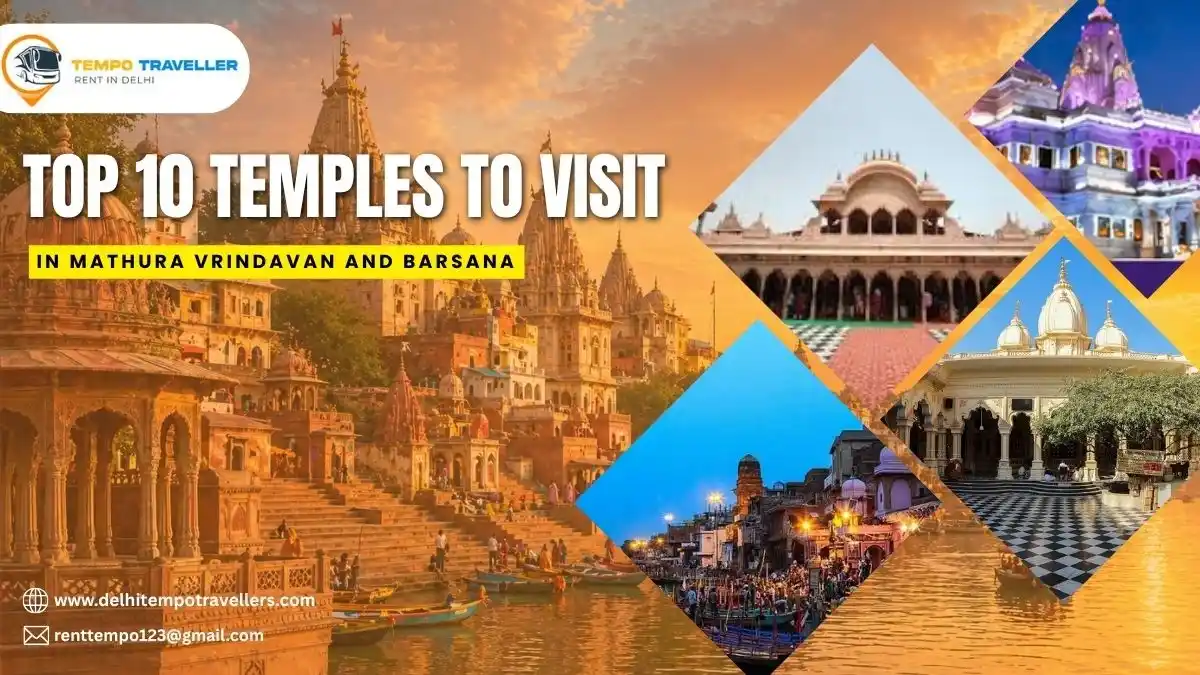
| 5,000+ Temples in Braj | 180 km From Delhi | 3 Cities Mathura • Vrindavan • Barsana | 2–3 Days Ideal trip | Free Most temple entries |
Introduction: The Sacred Land of Braj
There is a particular quality to the air in Braj-the sacred region centred on Mathura, Vrindavan, and Barsana-that devotees describe as charged with divine energy. Every lane, every ghat, every ancient well has a story woven into the mythology of Lord Krishna’s earthly life. The colour, the sound of kirtan drifting from temple courtyards, the smell of marigolds and incense: Braj offers a sensory and spiritual experience unlike any other pilgrimage circuit in India.
With over 5,000 temples scattered across the region, choosing which ones to visit requires guidance. The ten temples in this guide represent the essential Braj circuit-spanning Krishna’s birth in Mathura, his years of divine play in Vrindavan, and the home of Radha in Barsana. Together they tell the complete story of the divine love that defines this sacred land and has drawn pilgrims for thousands of years.
Whether you are a devout pilgrim completing the Braj Parikrama, a heritage traveller drawn to extraordinary medieval architecture, or simply a curious visitor from Delhi looking for a meaningful 2-day trip, this guide covers everything you need for an unforgettable Braj experience.
List of 10 Famous Temples in Mathura Vrindavan
| 01 | Shri Krishna Janmabhoomi Temple Mathura City Most Sacred Krishna’s Birthplace Must-Visit |
| The most significant temple in the entire Braj region-this is the precise site believed to be Lord Krishna’s birthplace. The Janmabhoomi complex encompasses the Keshav Deo Temple and the sacred Garbha Griha (birth chamber), a small prison cell where Devaki and Vasudeva are said to have been held by Kansa when Krishna was born at midnight. The energy in the Garbha Griha is extraordinary-pilgrims queue for hours for a few precious seconds inside this ancient chamber. Arrive before 6 AM in peak season to experience darshan before crowds build. Security is strict: no phones or cameras are permitted inside the main complex. The entire temple complex is large, with multiple shrines, courtyards, and exhibits narrating Krishna’s story. The adjacent Shahi Idgah mosque adds a layer of historical complexity that is itself part of Mathura’s living story. Location Mathura City Open 5 AM–12 PM, 4–9 PM Best Time Early morning Entry Fee Free | |
| 02 | Dwarkadhish Temple Mathura-Vishram Ghat area Iconic Shikhara Pushtimargi Tradition Famous Aarti |
| Built in 1814 and dedicated to Lord Krishna as Dwarkadhish-King of Dwarka-this temple is one of Mathura’s most visually magnificent. The ornate facade, soaring shikhara, and intricate carvings make it one of the most photographed temples in Braj. The inner sanctum houses a striking black stone idol of Lord Krishna adorned in elaborate seasonal outfits that change multiple times a day according to the Pushtimargi tradition founded by Vallabhacharya. The evening aarti at Dwarkadhish is considered one of the finest in Mathura-the combination of bells, cymbals, conch shells, and the sight of the illuminated deity draws large and deeply moved crowds. The surrounding market area is excellent for purchasing Mathura’s famous peda (milk sweet) and traditional brass items to take home. Location Vishram Ghat Best For Evening aarti Built 1814 CE Entry Fee Free | |
| 03 | Vishram Ghat & Mathura Ghats Mathura-Yamuna Riverfront Sacred Ghat Sunset Aarti Boat Rides |
| Vishram Ghat is not a temple in the conventional sense but is the spiritual heart of Mathura’s riverfront-where Lord Krishna is believed to have rested (vishram) after slaying the demon king Kansa. The ghat is lined with 25 smaller temples on either side, creating a remarkable riverside corridor of shrines. The Yamuna aarti conducted here at sunset-simultaneously from multiple platforms into the river-is among the most moving ritual experiences in North India. The boat ride along the Mathura ghats at dawn-gliding past layered temple facades, watching pilgrims bathe in the Yamuna as the city awakens-is something that stays with every visitor long after the trip ends. Start your first morning in Mathura here, at the river, to understand the sacred geography of the city before exploring inland toward the Janmabhoomi and market temples. Location Yamuna Riverfront Aarti Sunrise & Sunset Boat Ride Rs. 100–200 Best Visit Dawn or dusk | |
| 04 | Banke Bihari Temple Vrindavan Most Visited in Vrindavan Unique Curtain Darshan Founded by Swami Haridas |
| Banke Bihari is arguably the most beloved temple in Vrindavan, drawing the largest crowds and offering an experience entirely unlike any other temple in Braj. The presiding deity-a form of Krishna in the tribhanga (triple-bend) posture-was manifested by Swami Haridas, the 16th-century saint and musician considered one of Vrindavan’s greatest spiritual figures. The idol is so captivating that the curtain before the deity is repeatedly drawn and reopened during darshan to prevent devotees from losing themselves entirely in the divine gaze. Banke Bihari has no traditional aarti-the entire day’s worship is expressed through the constant rhythm of the curtain, the kirtan, and the collective bhav (devotional emotion) of the thousands gathered. The narrow lanes approaching the temple are themselves part of the experience-lined with flower sellers, prasad shops, and the constant, joyful sound of devotional music pouring from every direction. Location Vrindavan Bazaar Unique Feature Curtain darshan Crowd Level Very High Entry Fee Free | |
| 05 | Prem Mandir Vrindavan-Raman Reti Most Beautiful Architecture Night Light Show 7–8 PM White Marble Complex |
| Prem Mandir is the most architecturally spectacular temple in Vrindavan-a vast white Italian marble complex built by Jagadguru Kripalu Maharaj and completed in 2012. The temple covers 54 acres and features exquisitely carved marble panels depicting scenes from Krishna’s and Radha’s lives, life-size dioramas of the Raas Leela and Govardhan Leela, and a soaring main shrine visible from kilometres away. During the day, the white marble shimmers with celestial purity. After dark, coloured LED illumination transforms the complex into an otherworldly experience-cycling through orange, pink, gold, and blue hues in a nightly light show between 7 and 8 PM. Prem Mandir is unique in being both a deeply devotional space and one of the finest examples of contemporary temple architecture in India. The complex also houses a large spiritual theatre, gardens, and multiple smaller shrines. Location Raman Reti, Vrindavan Light Show 7–8 PM daily Built 2012 Entry Fee Free | |
| 06 | ISKCON Temple-Sri Krishna Balaram Mandir Vrindavan-Raman Reti International Visitor Friendly Guesthouse Available Prabhupada Samadhi |
| The ISKCON temple in Vrindavan-Sri Krishna Balaram Mandir-is one of the most beautifully maintained temple complexes in all of Braj. Built in 1975 by A.C. Bhaktivedanta Swami Prabhupada, the temple is a masterpiece of traditional Rajasthani marble craftsmanship housing three shrines: Radha Shyamasundara, Gaura Nitai, and Krishna Balarama. The samadhi (memorial shrine) and bhajan kutir of Srila Prabhupada are within the complex and open to visitors. ISKCON Vrindavan is exceptionally welcoming to international visitors and first-time pilgrims of all backgrounds, making it an ideal starting point for those new to Braj. The prasadam restaurant serves excellent vegetarian meals, and the guesthouse accommodation within the complex is popular, well-priced, and convenient. The Mangala aarti at 4:30 AM draws devotees from across the world; the 7 AM Shringar aarti is more accessible for most visitors. Location Raman Reti, Vrindavan Aarti 4:30 AM Mangala Built 1975 Entry Fee Free | |
| 07 | Radha Raman Temple Vrindavan-Old Town 16th Century Heritage Self-Manifested Deity Living Goswami Tradition |
| The Radha Raman Temple is one of Vrindavan’s most revered and historically significant shrines-home to a self-manifested (svayambhu) Shaligram deity of Lord Krishna as Radha Raman, ‘the one who brings joy to Radha.’ The deity was discovered in the early 16th century by the saint Gopala Bhatta Goswami, one of the six Goswamis of Vrindavan. Unlike many temples, Radha Raman has been continuously worshipped by the descendants of Gopala Bhatta Goswami for over 500 years without interruption. The temple atmosphere is intimate and deeply traditional in ways that the larger, more-visited temples cannot match. The Goswami priests who serve here maintain cooking, rituals, and Sanskrit traditions handed down through fifteen generations. The original dhuni (sacred fire) of Gopala Bhatta Goswami is still maintained in the temple courtyard. This is a temple for those who want to experience Vrindavan’s living spiritual heritage rather than its grandeur. Location Vrindavan Old Town Deity Svayambhu Shaligram Established 16th century Entry Fee Free | |
| 08 | Govind Dev Temple Vrindavan Built 1590 CE Mughal-Era Heritage Finest Medieval Architecture |
| The Govind Dev Temple, built in 1590 by Raja Man Singh I of Amber, was once the tallest temple in Vrindavan and one of the finest temple structures in the entire Indian subcontinent. Originally seven storeys high, the upper four floors were demolished during Aurangzeb’s campaigns, leaving three remaining storeys-still architecturally extraordinary. The fusion of Rajput and early Mughal architectural elements is considered one of the finest examples of 16th-century Indian temple architecture. The temple is dedicated to Govinda-the cowherd form of Krishna-and the original deity was discovered by the saint Rupa Goswami, sent by Chaitanya Mahaprabhu to rediscover the sacred sites of Braj. The current deity is a replica; the original was moved to Jaipur in the 17th century for protection and is now housed in the Govind Devji Temple there. The archaeological and artistic significance of this structure makes it an essential visit for heritage travellers. Location Vrindavan Built 1590 CE Builder Man Singh I, Amber Entry Fee Free | |
| 09 | Radha Rani Temple (Shriji Mandir) Barsana-Brahmagiri Hill Radha’s Hometown Temple Hilltop-250 metres Famous for Lathmar Holi |
| The Shriji Mandir in Barsana is the principal temple dedicated to Radha-not Krishna-making it unique in the Braj circuit and enormously significant for devotees who regard Radha as the supreme deity. Situated atop Brahmagiri Hill, the temple offers panoramic views of the Braj countryside. The climb up 200 stone steps is itself a pilgrimage-lined with flower sellers, sadhus, and the sound of devotional songs growing louder as you ascend. Barsana is most famous globally for Lathmar Holi, the unique festival where women playfully beat men with bamboo sticks in a joyful re-enactment of Krishna’s visits to Radha’s village-celebrated a day before Holi in Mathura. But the temple and the town deserve a visit in any season. The lanes of Barsana have a quieter, more intimate character than Mathura and Vrindavan, and a morning on this hilltop temple feels genuinely timeless. All these unique rituals make Mathura Vrindavan as one of the most famous places to celebrate Holi in India. Location Barsana, Brahmagiri Hill Famous For Lathmar Holi From Mathura 50 km Entry Fee Free | |
| 10 | Nandagram Temple Nandgaon-8 km from Barsana Krishna’s Childhood Home Hilltop Shrine Peaceful & Uncrowded |
| Nandagram-the village of Nanda Baba, Krishna’s beloved foster father-is a deeply peaceful hilltop temple that completes the Barsana circuit beautifully. The shrine enshrines Nanda Baba, Yashoda Maiya, Balarama, and Krishna as a family group, representing the complete picture of Krishna’s childhood years in Braj. According to tradition, this is where Krishna and Balarama grew up after being moved from Gokul, and the hill-Nandishwara Parvat-carries a gentle, familial energy. Many pilgrims pair Barsana and Nandgaon as a single half-day excursion-Radha on her hill, Krishna on his, separated by a few kilometres as in the mythological stories. The contrast in atmosphere between the two is striking: where Barsana is colourful and festive, Nandgaon is quiet and meditative. The views across the flat Braj plain from Nandishwara Parvat toward Barsana are serene and photogenic at any time of day. Location Nandgaon, 8 km from Barsana Deity Nanda, Yashoda, Krishna, Balarama Crowd Level Low–Moderate Entry Fee Free | |
Visiting Tips for Mathura Vrindavan Trip-Practical Guide
| DRESS CODE & ETIQUETTE Modest clothing is mandatory at all temples-cover shoulders and legs. Remove footwear at every temple entrance; carry a lightweight shoe bag. No photography inside the Janmabhoomi sanctum; cameras are allowed at most other temples. Avoid visiting on Ekadashi and major festival days unless you specifically want the crowd experience. |
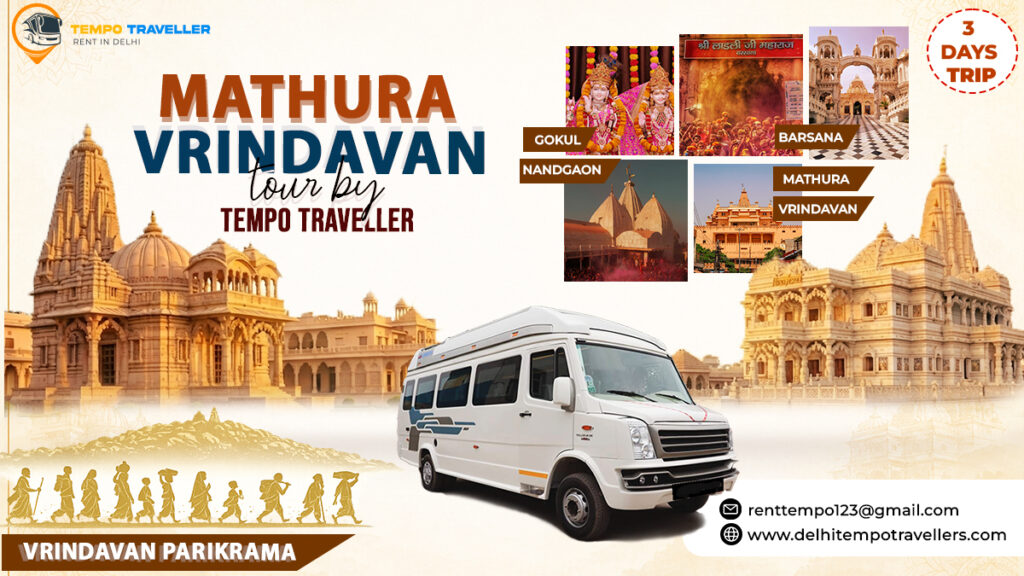
| Getting there from Delhi Mathura is 180 km from Delhi via Yamuna Expressway (2.5–3 hrs drive). Frequent trains from Hazrat Nizamuddin, Delhi Cantt, and New Delhi stations reach Mathura in 1.5–2 hrs. Hire a Tempo Traveller on Rent in Delhi or Urbania Van on Rent for group tours. | Best time to visit October to March is ideal-cool weather, clear skies, active festival calendar. Janmashtami (Aug/Sep) and Holi (Feb/Mar) are extraordinary but extremely crowded. Avoid peak summer (May–June)-Braj is intensely hot and humid. |
| Getting around locally Within Mathura and Vrindavan, e-rickshaws are plentiful and cheap (Rs. 20–50/ride). For Barsana and Nandgaon, a hired vehicle is essential-no reliable public transport between the towns. Negotiate auto fares upfront. | Where to stay Vrindavan offers the best accommodation range-from ISKCON guesthouse (budget-comfortable) to several good mid-range hotels. Mathura also has solid options. Barsana has very limited accommodation and is best treated as a day trip from Vrindavan. |
| Food & what to eat All food in Braj is strictly vegetarian and mostly satvik (no onion or garlic at temple dhabas). Mathura peda (milk sweet) is the iconic food souvenir. ISKCON’s prasadam hall offers excellent value meals. Chaat near Vishram Ghat is Mathura’s famous street food. | Budget per person (2 days) Budget traveller: Rs. 1,500–2,500 (dorm/basic hotel, dhabas, train+local transport). Mid-range: Rs. 3,500–6,000 (comfortable hotel, decent restaurants, hired vehicle). All major temples are free to enter. |
Find Here: How to reach Mathura from Varanasi?
3-Day Itinerary: Covering all 10 Temples of Mathura Vrindavan and Barsan
All 10 temples can be covered comfortably across 3 days-2 full days of temple visits and a half-day for the Barsana circuit. Here is the recommended itinerary, designed to visit each temple at its best time of day and avoid peak crowds:
| Day 1 | Mathura-Ghats, Birthplace & Dwarkadhish Arrive previous evening or early morning | Focus: Mathura city temples |
| 5:30 AM –Vishram Ghat for the sunrise Yamuna aarti. Take the 30-minute boat ride along the Mathura ghats as the city awakens-this is the most atmospheric hour in Mathura. 7:30 AM –Shri Krishna Janmabhoomi Temple. Early morning queues are shorter. Allow 60–75 minutes including the Garbha Griha darshan. Deposit phones at the security counter before entering. 10:00 AM –Dwarkadhish Temple for the mid-morning darshan and Shringar aarti. Explore the adjacent market for Mathura peda and brass items. 12:30 PM –Lunch in Mathura. Rest during the temple afternoon closure (most temples close 12–4 PM). Explore the old city lanes. 5:00 PM –Return to Vishram Ghat for the sunset Yamuna aarti-bells, diyas, and conch shells echoing across the river. Not to be missed. 7:00 PM –Drive to Vrindavan (15 km, 30 min). Check in and overnight in Vrindavan. Vishram Ghat | Janmabhoomi | Dwarkadhish | Yamuna Aarti | |
| Day 2 | Vrindavan-Five Temple Circuit Full day in Vrindavan | 5 temples | Best day of the trip |
| 6:00 AM –ISKCON Temple-Sri Krishna Balaram Mandir. Attend the 7 AM Shringar aarti (or 4:30 AM Mangala aarti for the truly dedicated). Spend 45 minutes in the marble complex. 8:00 AM –Radha Raman Temple for morning darshan in the ancient courtyard. The intimate atmosphere and the continuous dhuni fire are unlike any other Vrindavan temple. 9:30 AM –Govind Dev Temple-explore the extraordinary 16th-century architecture. Relatively uncrowded in the morning. Look for the carved details on the remaining storeys. 11:00 AM –Banke Bihari Temple-the heart of Vrindavan. Arrive before 11:30 AM before the temple closes at noon for afternoon break. Allow 45–60 minutes for the curtain darshan and the kirtan atmosphere of the surrounding lanes. 12:30 PM –Lunch and afternoon rest (temples close 12–4 PM). Rest in your hotel or explore Vrindavan’s parikrama path. 6:00 PM –Prem Mandir for evening visit. Explore the dioramas and carved marble panels before dark (6–7 PM), then stay for the stunning colour light show (7–8 PM). Arrive early-crowds gather quickly. ISKCON Temple | Radha Raman | Govind Dev | Banke Bihari | Prem Mandir | |
| Day 3 | Barsana & Nandgaon-Radha’s World Half-day | Drive from Vrindavan | Return to Delhi by afternoon |
| 7:00 AM –Depart Vrindavan for Barsana (50 km, ~70 min). The drive through the flat Braj countryside in the morning is peaceful and scenic. 8:30 AM –Radha Rani Temple, Barsana-climb the 200 stone steps up Brahmagiri Hill. Spend 60 minutes at the top. The morning view of the Braj plain and the devotional atmosphere on the hilltop are extraordinary. 11:00 AM –Drive to Nandgaon (8 km, 15 min). Visit Nandagram Temple on Nandishwara Parvat-quieter, gentler, and a perfect complement to the energetic Barsana climb. 1:00 PM –Begin return journey. Mathura is 50 km from Barsana; Delhi is approximately 180 km from Barsana via Yamuna Expressway (under 3 hours in normal traffic). Radha Rani Temple | Nandagram | Return to Delhi | |
If you have limited time, check out 2 Days Mathura Vrindavan Tour Package from Delhi and cover all important temples, sightseeing places in comfort.
Closing: Braj Is Not a Destination-It Is a Feeling
The ten temples above form a circuit through time, mythology, and living devotion that has barely changed in centuries. In Mathura, you stand where Krishna was born. In Vrindavan, you walk the lanes where he played. In Barsana, you climb the hill where Radha grew up. The stories here are not abstract-they are embedded in stone, in water, in the eyes of priests who have served the same deity for twenty generations.
The Braj Yatra circuit can be covered in 2 days or savoured over a week. It reveals itself differently at different times of year: electric and ecstatic at Janmashtami, wild and joyful at Holi, quiet and golden in the winter mornings of December and January. But in any season, at any pace, it gives back exactly what the visitor brings to it.
Come with devotion, or curiosity, or simply the desire to see something ancient and alive. Either way, Braj will meet you exactly where you are. The kirtan is always playing, the diyas are always lit, and the temples are always open.

Beautifully written blog about the top temples in Mathura, Vrindavan, and Barsana. The information is very helpful for devotees planning a spiritual trip.
For those planning a complete Braj tour, this detailed guide on Braj Chaurasi Kos Yatra is also very useful:
https://www.tempotravellerindelhi.in/blog/braj-chaurasi-kos-yatra/