

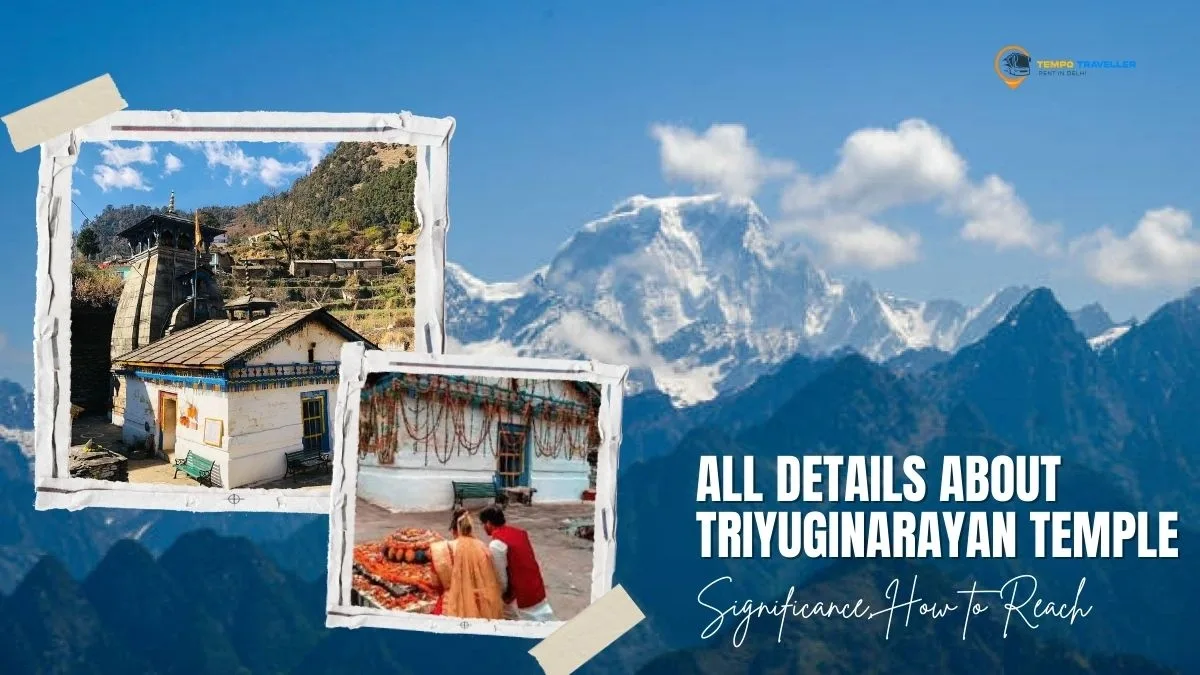
There are temples you visit. And then there are places you feel.
Triyuginarayan Temple falls into the second category. According to Hindu belief, this quiet village in Uttarakhand is where Lord Shiva and Goddess Parvati were married. Not symbolically. Not metaphorically. Right here.
You don’t need to believe every detail to sense the atmosphere. The village is calm. The temple is modest. And at the center of it all burns a fire that, according to legend, has never gone out.
The Akhand Dhuni (the eternal flame)
Inside the temple courtyard burns the Akhand Dhuni, an eternal fire believed to have been lit during the divine wedding. Devotees say this flame has been burning since three Yugas, which is how the temple got its name. Tri means three. Yugi means era.
People stand quietly near it. Some pray. Some just watch. No one rushes.
The roles of the gods
The wedding here is believed to have followed full Vedic rituals.
- Lord Vishnu is said to have acted as Parvati’s brother
- Lord Brahma performed the role of the priest
This detail is why the place holds special meaning for couples and families.
The four holy kunds
Around the temple are four sacred ponds:
- Rudra Kund
- Vishnu Kund
- Brahma Kund
- Saraswati Kund
Legend says the gods bathed here before the wedding ceremony. Even today, pilgrims wash their hands or sprinkle water gently, treating the space with respect rather than ritual urgency.
Quick facts at a glance
- Location: Near Guptkashi, Uttarakhand
- Altitude: Around 1,980 meters
- Deity: Lord Shiva
- Famous for: Eternal fire and divine wedding site
- Nearest base: Sonprayag
While it may not be as massive as other famous Shiva Temples in India like Somnath or Mahakaleshwar, Triyuginarayan holds a unique domestic charm because of its status as the divine wedding venue.
Triyuginarayan Temple as a wedding destination
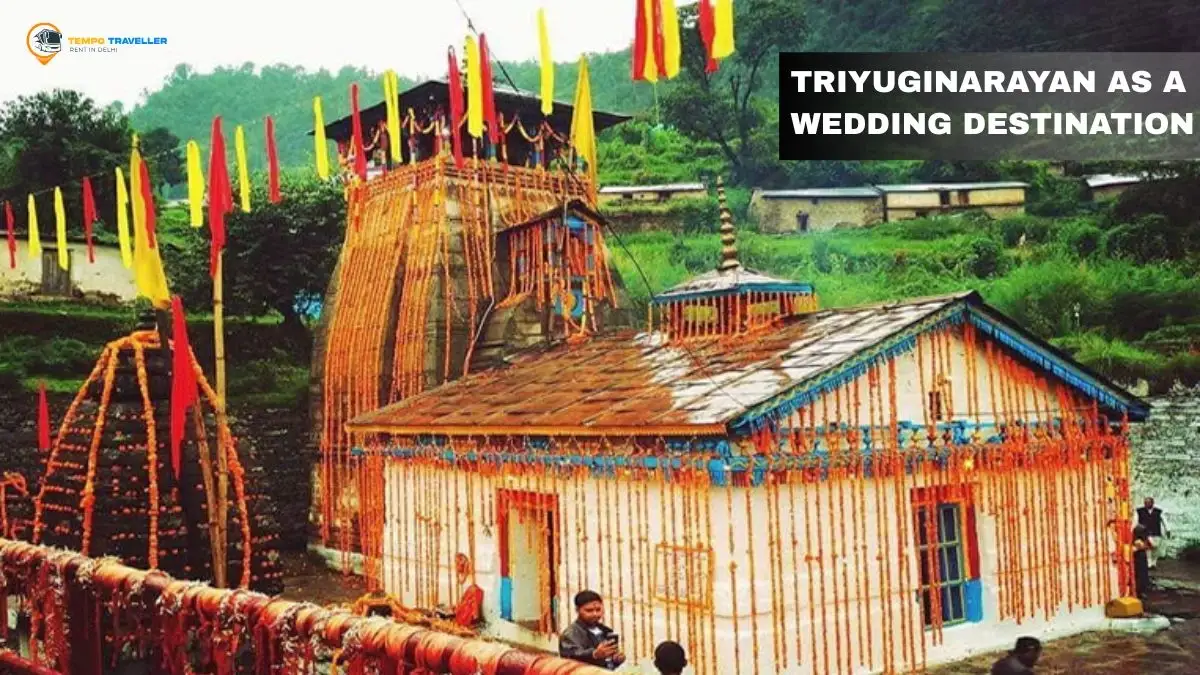
This temple isn’t just talked about in stories. Real weddings still happen here.
The ritual itself
Couples take their pherās around the Akhand Dhuni, just like Shiva and Parvati are believed to have done. The ceremony is simple, traditional, and deeply symbolic. There is no extravagance here. The focus stays on the ritual.
Can common people get married here?
Yes. You don’t need to be famous or influential.
What you do need:
- Prior coordination with a local priest (Pandit)
- Simple documentation for temple records
- Advance planning, especially in peak season
There’s no online booking system. Most arrangements happen locally through priests in Triyuginarayan or Guptkashi.
The celebrity connection
Interest in Triyuginarayan grew after Kavita Kaushik got married here. There have also been persistent rumors linking the place to high-profile families, which added to its modern popularity.
Still, the temple hasn’t changed its character. Weddings remain understated and respectful.
Bulletproof logistics: how to reach Triyuginarayan Temple
This part matters. If directions are unclear, people give up. Here’s the straightforward version.
The base camp: Sonprayag
Sonprayag is the main base point. It’s also the last major junction for Kedarnath-bound pilgrims.
The last mile: drive or trek?
From Sonprayag to Triyuginarayan Temple is a 12 km drive on a narrow road. If you are traveling with family or elders, it is highly recommended to hire a Tempo Traveller on rent in Delhi with a skilled hill driver who can navigate these sharp bends safely while you enjoy the view.
- By road: Around 12 km, narrow mountain road. Small cars and experienced drivers only.
- By trek: Around 5 km, steep but scenic trail. Takes 2 to 3 hours at a steady pace.
Many visitors drive one way and walk the other, depending on weather and energy.
The full route (simple flow)
Delhi → Rishikesh → Rudraprayag → Guptkashi → Sonprayag → Triyuginarayan
- Delhi to Rishikesh: Train, bus, or drive
- Rishikesh to Rudraprayag: Mountain roads, good condition
- Rudraprayag to Guptkashi: Smooth but slow
- Guptkashi to Sonprayag: Well-used pilgrimage route
The journey begins in the plains. Most travelers take a pause here to acclimatize. You can plan a short Haridwar and Rishikesh tour on your way up to attend the Ganga Aarti before heading towards the steeper mountain roads of Rudraprayag.
Suggested Read: Explore Uttarakhand with us
2026 road updates
With Char Dham infrastructure improvements, road conditions till Guptkashi and Sonprayag have improved compared to earlier years. However, the final stretch to Triyuginarayan remains narrow. Drive carefully and avoid late evenings.
Travel pro-tips that actually help
Best time to visit
- April to June: Pleasant weather, clear roads
- September to November: Calm, fewer crowds
Avoid:
- July–August: Monsoon landslides
- December–March: Snow can block access
The sacred ash tradition
Devotees take home ash from the Akhand Dhuni. It is believed to bring harmony and longevity to married life. Carry it respectfully. Locals take this tradition seriously.
Combine your trip wisely
Triyuginarayan fits naturally with:
- Guptkashi for Vishwanath Temple
- A Kedarnath Temple trek, if you’re already in the region
Many pilgrims visit Triyuginarayan Temple before Kedarnath as a symbolic beginning. Since the base camp for both is Sonprayag, you can easily add this stop to your Delhi to Kedarnath road trip itinerary without taking a major detour.
What the temple looks like (and why it feels familiar)
Architecturally, Triyuginarayan Temple resembles a smaller version of Badrinath Temple. Stone walls. Sloped roof. Minimal decoration. It blends into the surroundings rather than standing apart.
That simplicity is intentional. The focus stays on the story, not the structure.
A calm ending, before you decide
Triyuginarayan Temple is not about grand scale. It’s about continuity. A fire that keeps burning. A story that keeps repeating itself in quiet ways through human weddings and pilgrimages.
If you’re drawn to places where mythology feels close to everyday life, this temple will stay with you. Not because it demands attention, but because it doesn’t.
